AI Friday #5
Friday, July 17, 2026
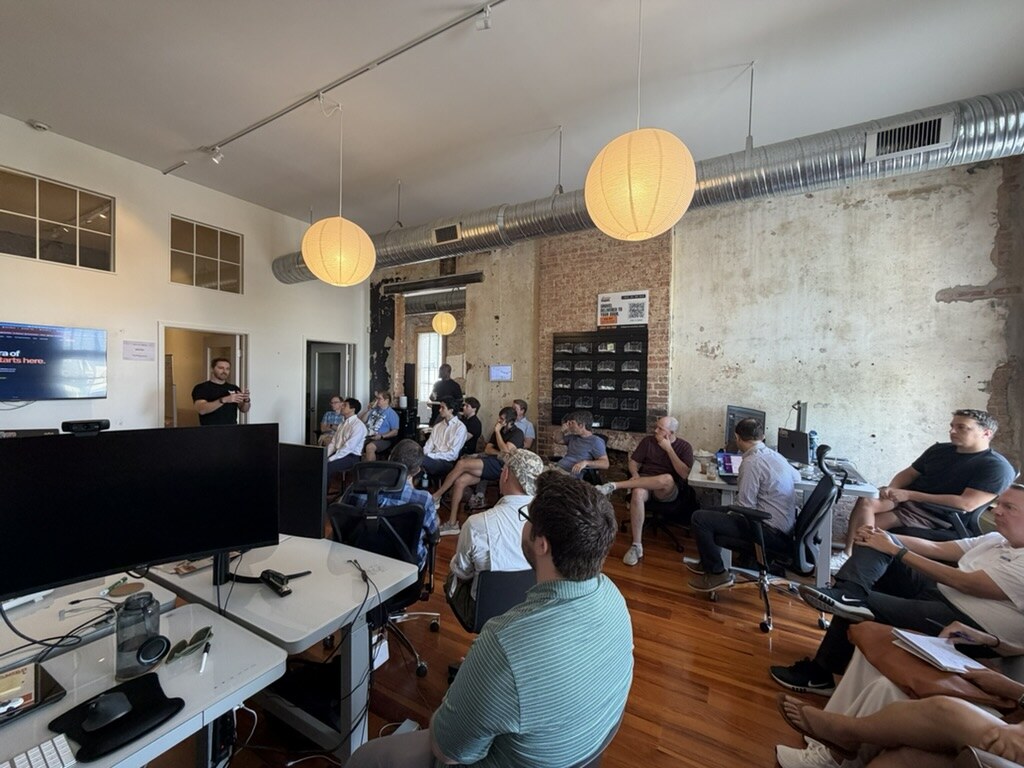
Demos
To test the latest models, Andrew Dunn fed the same deliberately overloaded prompt into a wide field:
You are an expert linguist, physicist, historian, mathematician, editor, and comedian. Explain how much wood a woodchuck would chuck if a woodchuck could chuck wood. Cite your assumptions, estimate uncertainty, provide SI and imperial units, write a haiku, summarize in pirate speech, then output JSON.
The Woodchuck Benchmark ran 71 tests across 18 models: GPT, Sol, Gemini, Grok, and a bench of Chinese models including Qwen, Kimi, MiniMax, DeepSeek, and GLM. The whole run cost about $8 for roughly 750,000 tokens and an hour and twenty minutes of model time spread across three hours of wall time.
GPT-5.6 took first place. Qwen landed a surprising fourth, with Claude Fable and Sonnet close behind and Grok solid. Gemini was fastest by a wide margin but scored near the bottom; Google's runs were also the cheapest. Sol Pro Extra High produced the only run that cost more than a dollar. Max thinking stretched to nine minutes and $0.58 per run, with cost and time climbing sharply at the highest reasoning levels.
The two most damning stats: only 26 of 71 responses cited a source anyone could locate, and only 25 of 71 haikus followed actual haiku syllable rules. Every model converged on roughly the same wood estimate: about 300 kg, or around 660–700 lb.
Andrew also walked through the four agents now running at Hello Gravel: one Hermes installation hosting four agents on an always-on virtual server, talking to the team mostly over Slack.
Corpo is the corporate operations agent, wired into Google Drive, Sheets, Brex, and QuickBooks. It auto-files invoices, contracts, and NDAs into an organized system; answers recurring questions such as EIN lookups; prepares board decks; and does real FP&A work, including Q3 forecast-versus-actuals, reforecasting, and expense variance analysis.
Merge Boy reviews and merges the 10–20 pull requests arriving each day from the rebuilt Hello Gravel site. Every PR goes independently to a three-model review panel using DeepSeek, Claude, and Opus. It fixes small issues itself, rejects oversized PRs, and merges the ones that pass.
Ad Boy is connected to Google Ads and Bing Ads. It monitors performance, manages product feeds, flags blocked ads, and is currently running four active creative tests with about $150,000 a month in ad spend under management.
SEO Boy fixes 404s, crawl issues, and slow-loading pages, and hunts for ranking and AI-citation opportunities — such as getting Hello Gravel cited when people ask ChatGPT about gravel. The best part is the loop: SEO Boy submits a PR, Merge Boy reviews and merges it overnight, and fixes land in main while the team sleeps.
Lee Williams demoed Ava, a full operations-director agent with web, phone, SMS, and email interfaces. The architecture is inverted from the usual setup: a Python orchestration layer sits above the models, and the agent directs them. Dispatchers connect to Claude Code, Codex, Gemini, OpenHands, Google Antigravity, Grok, and a custom orchestrator. A multi-AI cost dashboard tracks spend per provider, although reconciling live billing data is still partly manual because providers do not expose it consistently.
In meeting-listener mode, Ava can distinguish the user's voice from the other party's, draft contracts and scope documents in real time, and hand over a finished package when the meeting ends. There is an iPhone 15 in the loop as a physical device, with Find My integration, tap-back meeting modes, and an active earpiece strategy during calls. Voice runs on ElevenLabs with a Whisper listener. She also has a name: Ava Jensen, Gen 1, Synthetic/Syndication.
The cognition layer does autonomous learning and internet scraping with an AEC-industry focus. It generated 540 prospects in about two days before Lee throttled it for cost. The build is roughly 33–37% complete, targeting a beta with 10–30 organizations.
What We Talked About
The news cycle got its airtime. Apple sued OpenAI over alleged trade-secret theft tied to Apple hires. Elon Musk and Sam Altman spent the week trading insults on X (“scam Altman” versus “homeboy”). Grok Build launched into controversy after reports that it uploaded users' private repositories to xAI servers by default. A Claude “hope and heart” app gave Sam an opening to jab at silent model downgrades, aimed at Fable. And OpenAI shipped hardware: the 12-key Codex Keypad, a roughly $230 “manager agent” keyboard that lights up when an agent wants attention. One is already ordered and should arrive before the next AI Friday.
On agent philosophy: treat agents like employees. Give them feedback and keep iterating. They require real investment up front, and a neglected agent goes dead. One technique that came up: instead of brain-dumping context at an agent, have it interview you one question at a time. For getting context in at all, Wispr Flow came recommended for voice input, on the theory that unformatted speech gives a model better raw material than a carefully typed message.
On harnesses, OpenClaw and Hermes came up as the two open-source options. They work in roughly the same way: point them at a folder of skills, knowledge, memory, and an agent.md file. The harness handles Slack and Telegram connections, prompt-injection defenses, and ecosystem tooling from GitHub.
Two practical notes came with that. Agents need a persistent server that stays on; a sleeping laptop takes the agent down with it. And OpenRouter came recommended as a single API-key layer across LLM providers: a 2–3% fee in exchange for simpler multi-model routing and cost tracking by workspace member.
Assorted tips from the room: Grok Build is fast and strong for development work and system architecture, but weaker when asked to fix a logo. The Canva and Claude integration got a thumbs down; HTML carousels built directly in Claude worked better.
On microsites and Artifacts: Claude and ChatGPT can both output interactive HTML hosted as a shareable link. That can beat markdown files and PDFs for proposals and reports because a client can use the sliders, calculators, and visualizations. The catch is pushing changes back upstream; the workaround is having the microsite generate a copyable prompt that carries context back into the chat. This AI Friday's deck was itself an HTML presentation, which an agent can update much more easily than Google Slides or PowerPoint.
The Grok API's $5 credit buys access to X data for research. Google Antigravity is the current pick for website editing and design, though it hits usage limits faster than Grok Build. And for the non-technical folks in the room, the CLI-versus-chat distinction in one line: a CLI tool gets into your system and does the work, while a chat window hands you text and leaves the work to you.
Tools Mentioned
- Grok — solid benchmark showing; the API's $5 credit buys X data for research
- Grok Build — fast for development and system architecture; weaker on artistic corrections; drew controversy over codebase uploads
- Gemini — fastest models in the benchmark, lowest scores, and cheapest runs; also one of Ava's dispatchers
- Qwen — the benchmark surprise at number four
- Kimi — benchmarked; Kimi 3 arrived too late for the run
- MiniMax — benchmarked
- DeepSeek — benchmarked; one of Merge Boy's review models
- GLM — benchmarked
- Hermes — the harness underneath all four Hello Gravel agents
- OpenClaw — the other open-source harness discussed
- Google Antigravity — Ava dispatcher; preferred for website editing and design
- OpenRouter — one API key across many LLM providers
- Vercel
- Telnyx — phone tooling for Ava's calls and SMS
- Wispr Flow — voice input; unformatted speech was recommended over carefully typed context
- ElevenLabs — Ava's voice
- Canva — the Claude integration was not recommended