AI Friday #3
Friday, May 15, 2026
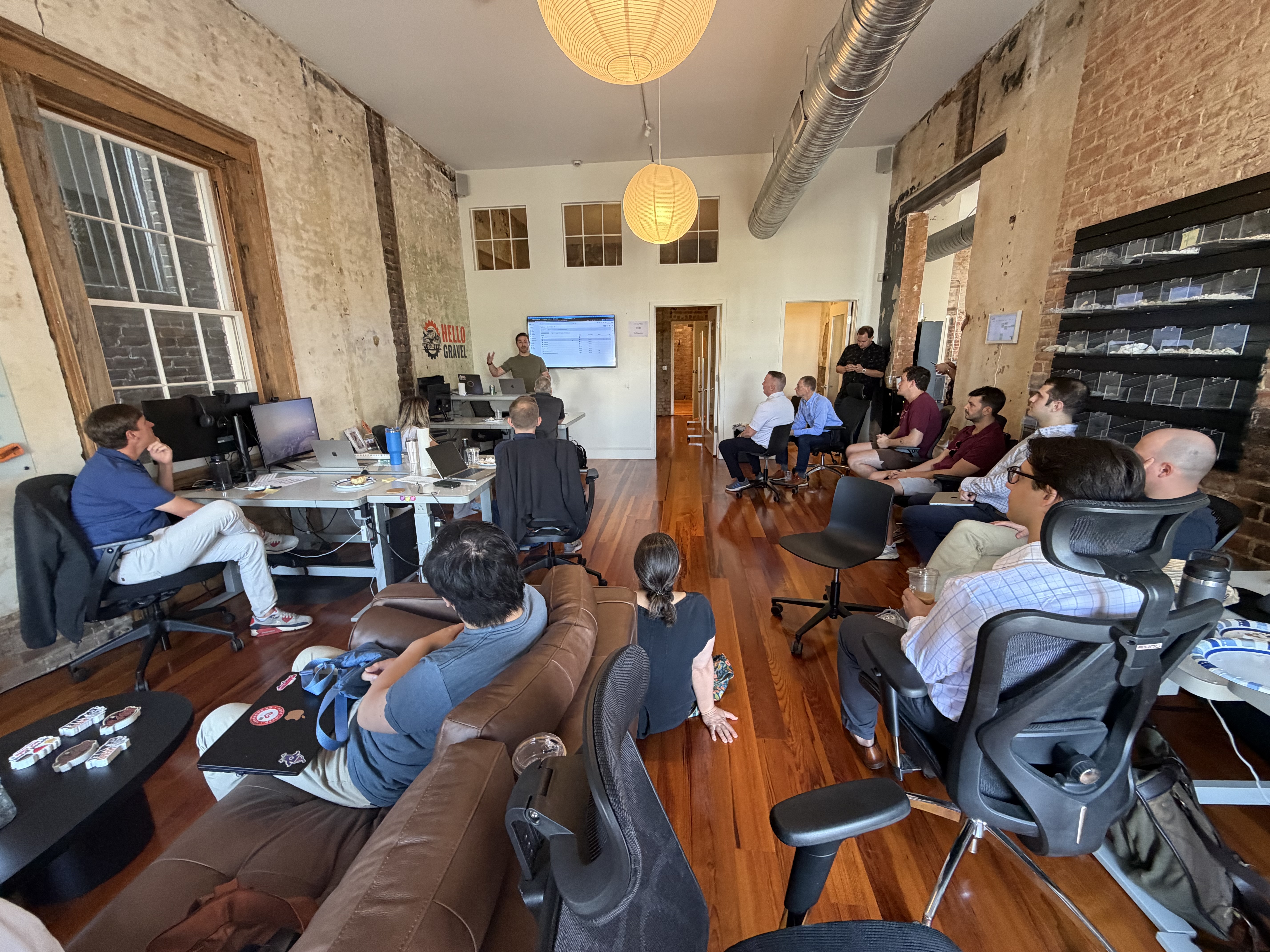
Demos
Andrew Dunn walked through the Hello Gravel team's current setup. They're spinning up personal Slack assistants as Hermes agents hosted on exe.dev virtual machines, routing through multiple models via OpenRouter. He's mostly using the Claude and Codex apps rather than the CLI, and has been using the Gstack skill for project context.
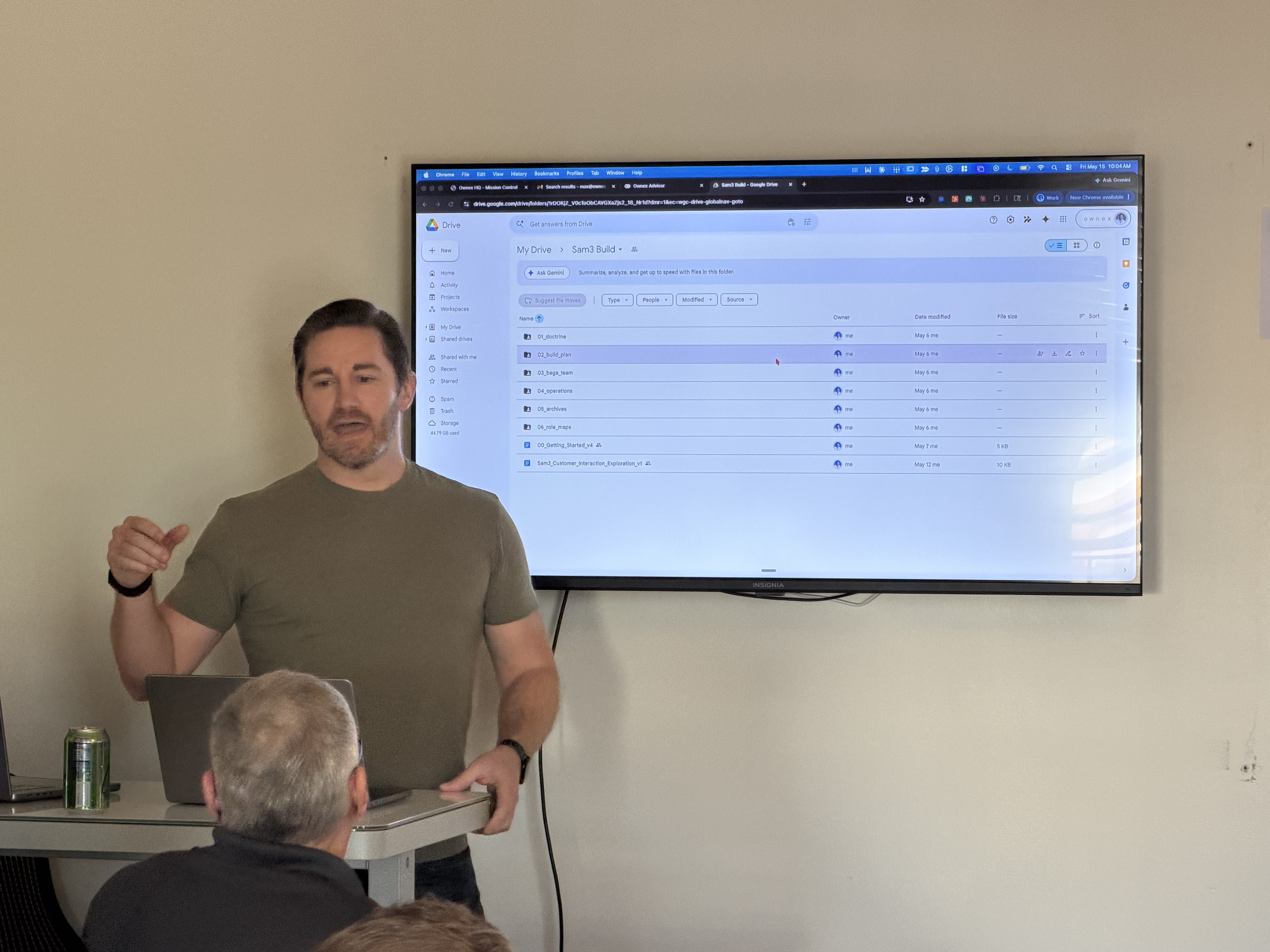
Max Matern is a motorcycle industry consultant who sold a BMW/Ducati shop in 2019, came back in July 2024 to rescue a failing dealership, and turned it around in 90 days. Now he's running that dealership as a live lab for AI experiments, hosting a weekly podcast about what he's testing, and building OWNEX — a platform that takes vibe-coded prototypes and turns them into production tools. His workflow: build in a Docker sandbox with Claude Code, read architecture markdown files from his fractional CTO, open a PR, CTO reviews and deploys. The first tool he shipped this way doubled front-end margin on motorcycle sales.
The centerpiece is Samantha 2, an orchestrator agent with sub-agents handling specific functions: Angela (finance), Jessica (lidar to 3D models), Pamela, Sandra, and Rita. Samantha generates dealership analysis reports that previously took a month of manual work. Now: 40 seconds, end-to-end, delivered as interactive HTML. She logs into legacy DMS systems using Playwright for RPA — the systems allow data pulls via API but won't accept pushes, so she records URL breadcrumbs from button clicks and automates from there. Daily reports run across multiple dealerships covering sales units, parts, and service orders.
He also demoed the OWNEX Advisor chat interface, built on a parts and labor database scraped from historical dealership data. Ask it about a 2016 Vespa ET4 first service and it returns a complete quote with labor hours, median pricing, and references to every data point it pulled from. Built the day before the meeting.
Samantha 3 is the next step: replace the wall of legacy system logins with a single agent interface. Employee chats with a specialized agent (service advisor or salesperson persona), the agent builds a dynamic working pane, and approved work pushes directly to the DMS. Less screen time, more face time with customers.
Laura Williams brought a lot. She's been running experiments across tools and form factors, and the range was impressive.
Pixted is a kid-focused drawing app inspired by the design philosophy of Craig Hickman, who made Kid Pix. Kid Pix meets crafting: no words in the UI, glitter, stamps, a melting page tool, textures, a dodo bird undo button. She made the custom icons, textures, and stickers in Canva, used Suno and ElevenLabs for sound design, and built it primarily with Claude Code over about 48 hours across four days. Lovable was her worst tool for this one — too opinionated on design.
Lenguistics is a linguistic portrait built from the Lenny's Podcast transcript corpus. She used Claude to develop a parsing methodology, pulling out recurring phrases, speech patterns, and silences — then turned the results into a data-viz-style essay written in Lenny's own voice profile. Built in roughly one evening (six to eight hours) using Replit. She had one note on Replit: it very obviously gamifies the coding loop to keep you in it.
She also built a theremin/synth experiment using TouchDesigner and Python — webcam input reads finger counts and eyebrow expressions to control sound. Codex helped with the Python. Codex also handled a Washington Post–style article layout she was working on — editorial design work where it did well. Claude's design tooling was less useful for that kind of mockup work.
She has an AI guestbook on her site: pages where AI agents can leave messages. She uses an LLMs.txt file to guide what agents can and can't do there. And she walked through a Claude-to-Suno song workflow: Claude writes the lyrics and the sound prompt, Suno produces the track.
Tools Mentioned
- Claude (app + Code) — Max's primary build tool; Laura's for Pixted and the linguistic portrait
- Codex — Laura's tool for Python, editorial layouts, and coding assists
- OpenRouter — multi-model routing for agents
- Hermes Agent — agent framework for the Hello Gravel Slack assistants
- exe.dev — VM hosting for the agents
- Gstack — project context skill (Andrew)
- agency-agents — similar project scaffolding approach; used in part to build Home Insights Report
- Playwright — RPA for legacy DMS systems (Max)
- OWNEX — Max's platform for dealership AI tools
- Lovable — Laura used it; said it was too opinionated for Pixted
- Replit — Laura used it for Lenguistics; noted the gamification
- AI Daily Brief — podcast mentioned
- TouchDesigner — Laura's theremin/synth experiment
- Suno — music generation (Laura's song workflow + Pixted sounds)
- ElevenLabs — sound design for Pixted
- Canva — custom icons, textures, and stickers for Pixted
- LLMs.txt — Laura uses it to guide agent behavior on her site
- Whisper Flow — voice-to-text for hands-free development